Discipline Over Dopamine: Why You Keep Reaching for Something You Don’t Enjoy
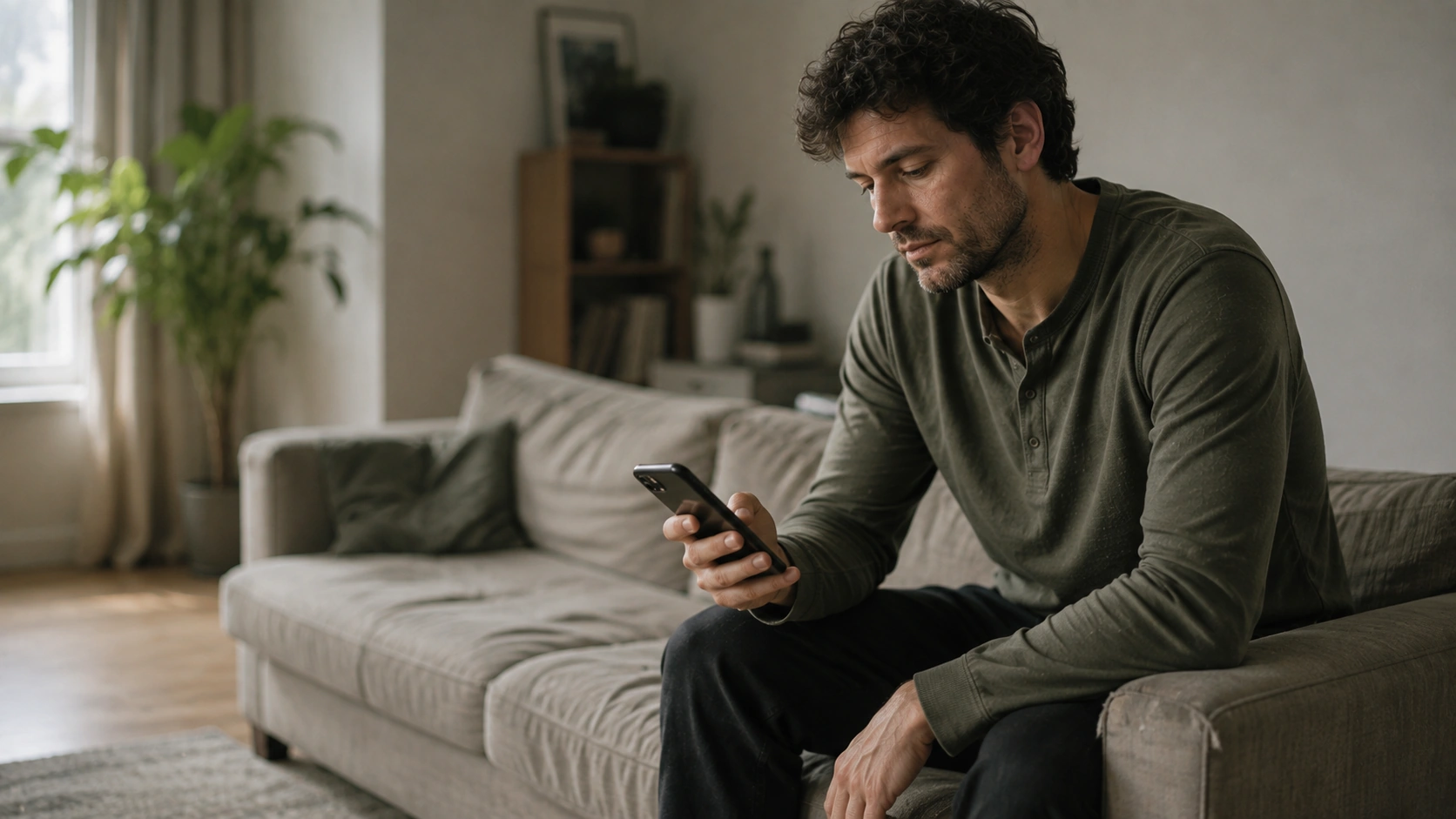
You put the phone down. Forty seconds later it’s back in your hand and you don’t remember picking it up. Nothing on it was interesting the first time.
Most explanations of that moment start with willpower and end with a lecture. There’s a better one, and it comes from forty years of work on what dopamine actually does, which turns out to be almost the opposite of what everyone says it does.
Think about an itch instead. Nobody enjoys scratching. No man lies in bed anticipating a good scratch the way he anticipates a meal. And yet when an itch arrives, the hand goes, reliably, often before you’ve decided anything. Scratching gives relief without giving pleasure, and it usually makes the itch worse.
Urge and enjoyment are separate things. Your brain runs them on separate hardware, which is where most advice about discipline over dopamine goes wrong before it starts.
The Chemical Everyone Names and Nobody Describes
Dopamine is described almost everywhere as the pleasure chemical. Feeds give you a hit of it, sugar gives you a hit of it, and the modern world has flooded you with hits until nothing ordinary registers.
The researchers behind most of what is known about dopamine and reward call that a brain myth, in those words, on their own lab’s website. Kent Berridge and Terry Robinson at Michigan have spent decades demonstrating that dopamine mediates a specific kind of wanting, and not pleasure.
Their term for it is incentive salience. It’s the property that makes something grab you, pull your attention, feel worth going toward. It’s the pull, and only the pull.
Wanting and Liking Run on Different Machines
The two systems are physically distinct, and they aren’t built to the same standard.
Wanting runs on large, robust neural systems including mesolimbic dopamine. It’s durable, it’s hard to knock out, and it responds strongly to cues. Liking, the actual pleasure you get when the thing arrives, runs on much smaller and more fragile systems, and it does not depend on dopamine at all.
That asymmetry explains a great deal about modern life. The powerful, cue-driven, hard-to-suppress system is the one being aimed at by everything designed to hold your attention. The delicate one that actually delivers satisfaction is not the target and was never the product.
Berridge and Robinson’s central finding on addiction follows the same shape. What escalates over time is wanting, especially wanting triggered by cues, and it escalates without any matching increase in liking. People end up pursuing things harder while enjoying them less. In the extreme case that’s addiction. In the ordinary case it’s your evening.
Seventeen Men and a Missing Ingredient
The cleanest demonstration in humans is small and blunt.
At Bristol, Charlotte Hardman’s group gave seventeen healthy men a drink stripped of tyrosine and phenylalanine, the amino acids the body uses to build dopamine. Double blind, counterbalanced, each man serving as his own control across two sessions. Then they measured appetite, how much men liked the food, and how much they ate.
Lowering dopamine reduced their appetite ratings, which is the motivational side. Their liking for the food was unchanged.
Take dopamine away and the food tastes exactly as good. You just stop wanting it as much.
The animal work is older and shows the same split from the other direction. Rats with heavily depleted dopamine still produced entirely normal pleasure reactions to sugar and normal disgust reactions to bitterness. The hedonic machinery was intact. The drive to go and get it was gone.
Say the obvious thing about that study. Seventeen men, one session each way. It sits inside a much larger body of converging work rather than carrying the argument alone.
The Cue Is the Trigger, Not the Thing
Incentive salience gets attached to cues rather than to rewards, and that’s the detail that makes your phone work.
A cue that has been paired often enough with something rewarding becomes a magnet in its own right. The badge on the icon. The buzz in your pocket. The particular shape of the app on the third row of your home screen. These carry pull that has nothing to do with what’s behind them, which is why the pull survives a hundred consecutive occasions of finding nothing worth reading.
You were never chasing the pleasure. You were answering an itch.
And cue-triggered wanting persists. Berridge and Robinson’s work on sensitization found that the changes it produces in the brain are long lasting, outliving the behavior that created them by a long way. The reach for a phone you’ve left in another room is that persistence, showing up in miniature.
Where Discipline Over Dopamine Gets It Half Right
Discipline over dopamine, as a slogan, describes a real practice and a wrong mechanism.
The practice is removing sources of stimulation for a stretch of time, and it does something useful. What it does is reduce your exposure to cues, which is a behavioral change rather than a chemical one.
The mechanism, as usually described, has the biology backwards. You cannot lower your dopamine by not looking at your phone, and you would not want to. Dopamine drives motivation, and severe dopamine loss is what Parkinson’s disease is made of. A weekend without screens does not reset receptors, and there is no depleted tank refilling while you sit in a quiet room. Treating a behavioral technique as brain chemistry sets you up to expect a transformation that no amount of abstinence can deliver, and to conclude you’re broken when Monday feels much like Friday.
What Actually Loosens the Grip
If the pull is cue-driven, the useful moves are about cues rather than about resolve.
- Break the pairing, not the habit. Kill badges and banners. A cue that stops predicting anything gradually loses its charge, and the loss happens without your involvement.
- Put distance between you and the trigger. The phone in another room removes the cue from your visual field entirely, which beats resisting it forty times, and it’s the same principle behind changing your circumstances instead of your resolve.
- Notice the gap between urge and enjoyment. After a session, ask plainly whether you enjoyed it. Most men find the honest answer is no, and holding that answer in mind weakens the story that the pull is about pleasure.
- Give the itch somewhere else to go. Wanting does not switch off, so a protected stretch of demanding work absorbs it better than an empty evening does, which is the practical case for structuring your day into defended blocks.
- Expect it to take weeks. Sensitization is durable. Cue-triggered pull fades slowly, and a bad Tuesday in week three is the normal shape of it, not evidence of failure.
None of that requires you to enjoy anything less. The point of removing the pull of one thing is having attention left for the things you actually like, which is a separate system and one that was never the problem. The quiet erosion that comes from constant stimulation works on the same mechanism, and so does the mental noise that makes deciding anything feel heavy.
Food runs on a related but distinct system. Appetite involves the same wanting circuitry, though the reason processed food defeats you is a separate matter of signals arriving after the plate is empty.
When the Pull Is Something Bigger
There’s a line between a habit you dislike and a problem that has taken hold, and the difference is consequences.
If a behavior is damaging your work, your money, your sleep or your relationships, and you have tried to stop and been unable to, that’s worth taking to a doctor rather than to another article. The same applies to gambling, to drinking, and to anything you find yourself hiding. Incentive sensitization is precisely the mechanism that makes these things persist long after the enjoyment has gone, which is why willing yourself out of them so often fails and why proper support works better than another attempt at discipline.
Scratching
The framing you’ve been given makes every one of these moments a verdict on your character. You reached for the phone again, so you must be weak, undisciplined, addicted to cheap pleasure.
Cheap pleasure was never involved. The system that produced the reach is a large, ancient, cue-driven mechanism doing exactly what it evolved to do, aimed at you deliberately by people who understand it well. The system that would have told you whether any of it was worth doing is smaller, quieter, and was not consulted.
You already know what an itch feels like, and you already know that scratching it is not a pleasure. The useful question is not how to want it less. It’s what you have left the itch access to.
References
- Berridge KC, Robinson TE. Liking, wanting, and the incentive-sensitization theory of addiction. American Psychologist. 2016;71(8):670-679. Berridge Lab, University of Michigan
- Robinson TE, Berridge KC. The Incentive-Sensitization Theory of Addiction 30 Years On. Annual Review of Psychology. 2025. Berridge Lab, University of Michigan
- Berridge KC, Robinson TE. What is the role of dopamine in reward: hedonic impact, reward learning, or incentive salience? Brain Research Reviews. 1998;28(3):309-369. https://www.sciencedirect.com/science/article/abs/pii/S0165017398000198
- Hardman CA, Herbert VMB, Brunstrom JM, Munafò MR, Rogers PJ. Dopamine and food reward: effects of acute tyrosine/phenylalanine depletion on appetite. Physiology & Behavior. 2012;105(5):1202-1207. https://doi.org/10.1016/j.physbeh.2011.12.022
- Berridge Lab, University of Michigan. Neuroscience of Liking and Wanting. https://sites.lsa.umich.edu/berridge-lab/research-overview/neuroscience-of-linking-and-wanting/
FAQ
Q1. Is dopamine really the pleasure chemical?
No, and the researchers who established most of what is known about dopamine and reward describe that idea as a brain myth. Dopamine mediates a form of wanting called incentive salience. Pleasure, or liking, runs on separate and much smaller neural systems that do not depend on dopamine.
Q2. Why do I keep scrolling when I am not enjoying it?
Because wanting and liking are separate systems and only one of them is being triggered. Cues such as badges, buzzes and app icons acquire pull of their own through repeated pairing, and that pull survives finding nothing worth reading, because it was never generated by the reading.
Q3. Does a dopamine detox work?
The practice reduces your exposure to cues, which helps. The mechanism it is sold on is wrong. You cannot lower your dopamine by avoiding your phone, there is no tank refilling, and no weekend resets receptors. Expect a behavioral change rather than a chemical one.
Q4. What is the evidence that dopamine drives wanting rather than pleasure?
In one Bristol study, seventeen healthy men were given a drink stripped of the amino acids needed to build dopamine. Their appetite ratings fell while their liking for the food was unchanged. Earlier animal work found the same split: dopamine-depleted rats still showed entirely normal pleasure reactions to sugar.
Q5. How long does it take for the urge to fade?
Longer than most plans allow. The brain changes underlying cue-triggered wanting are durable and persist well after the behavior stops. Expect the pull to weaken over weeks rather than days, and expect a difficult stretch partway through rather than a steady decline.
Q6. Should I just try harder to resist?
Resistance works on the moment of urge, which is the least favorable place to fight. Removing or weakening the cue works before the urge arrives, which costs far less. Turning off notifications and putting the device in another room does more than repeated in-the-moment refusal.
Q7. When does a habit become something that needs help?
When it is damaging your work, finances, sleep or relationships and you have genuinely tried to stop without being able to. Incentive sensitization is the mechanism that keeps behavior going after the enjoyment has gone, which is why willpower alone often fails. That situation is worth discussing with a doctor.
Medical disclaimer: This article is for educational purposes only and is not medical advice, diagnosis, or treatment. Individual results vary. Always consult a qualified physician about your own health, especially before starting a new exercise program, changing your diet, or taking any supplement.